How does your time in the water influence your work?
I spend a lot of time surfing and being in the water, especially at the beginning or the end of the day when the light is doing really cool things. Out there, you’re not thinking about day-to-day stuff; your mind is just able to relax and wander.
Lots of inspiration for painting comes from being in the sea because the two spaces feel very similar. When you’re painting in that flow state, your mind wanders in the same way. It’s also about going back to the same places repeatedly. I have beaches I visit all the time, and I’ll look out and think, "That’s what I want to paint," or "That’s special to me." Sometimes it’s simply about how the light is changing.
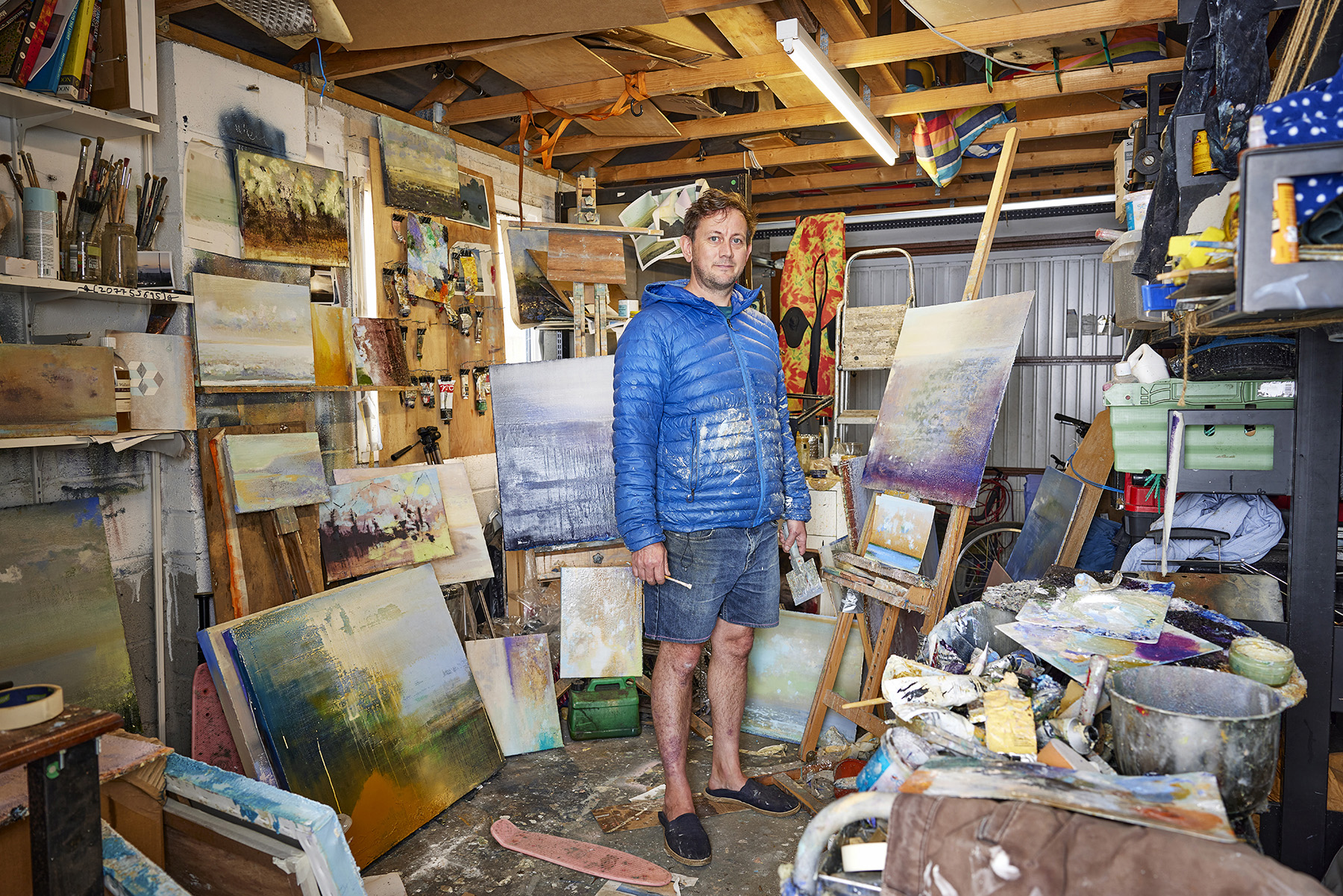
Luke Knight in his studio. Image credit: Chris Frazer Smith
Your paintings evolve in layers; why is that?
Working in layers helps isolate things. Painting is incredibly complex, and there’s a tonne to process all at once. By isolating steps, you can focus on just one element at a time and take everything else away.
I don't need to worry about the whole composition. I just focus on putting paint down. Later on, I might focus on one specific section, whether that’s masking it off, rubbing it back, focusing on colour, or scraping. Because you’ve isolated the variables, you can let your mind wander and simply enjoy the physical act of applying paint. Over time, the image builds up layer by layer.
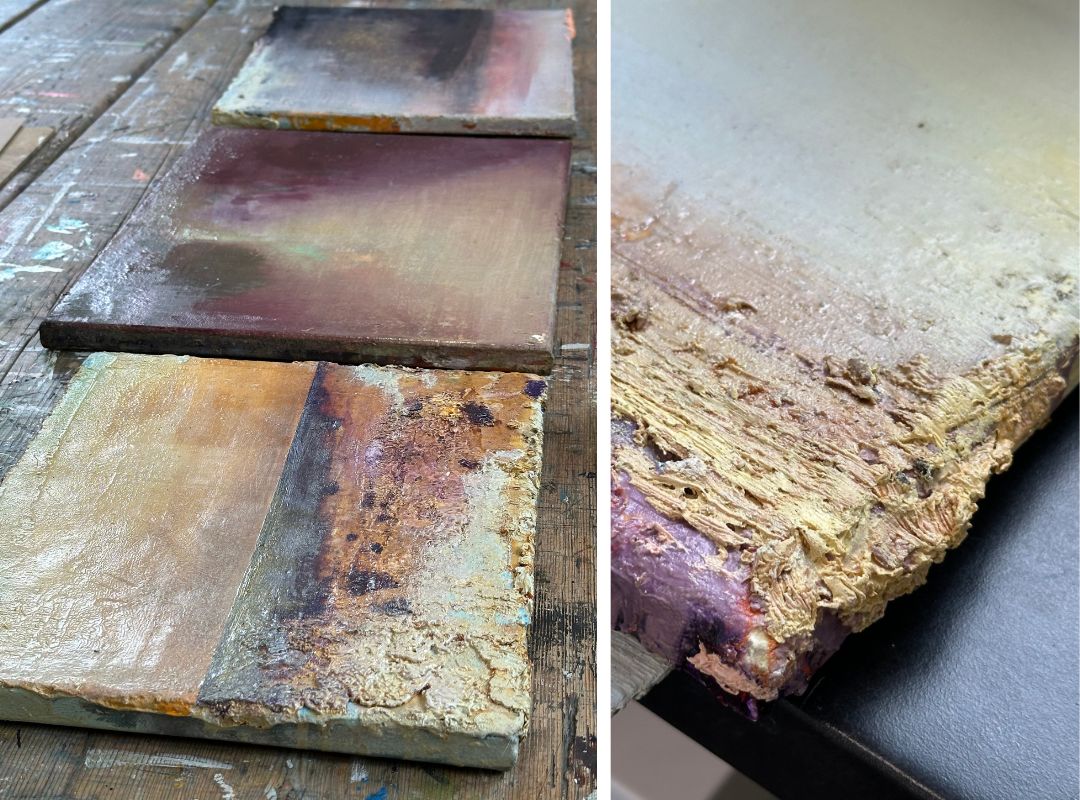
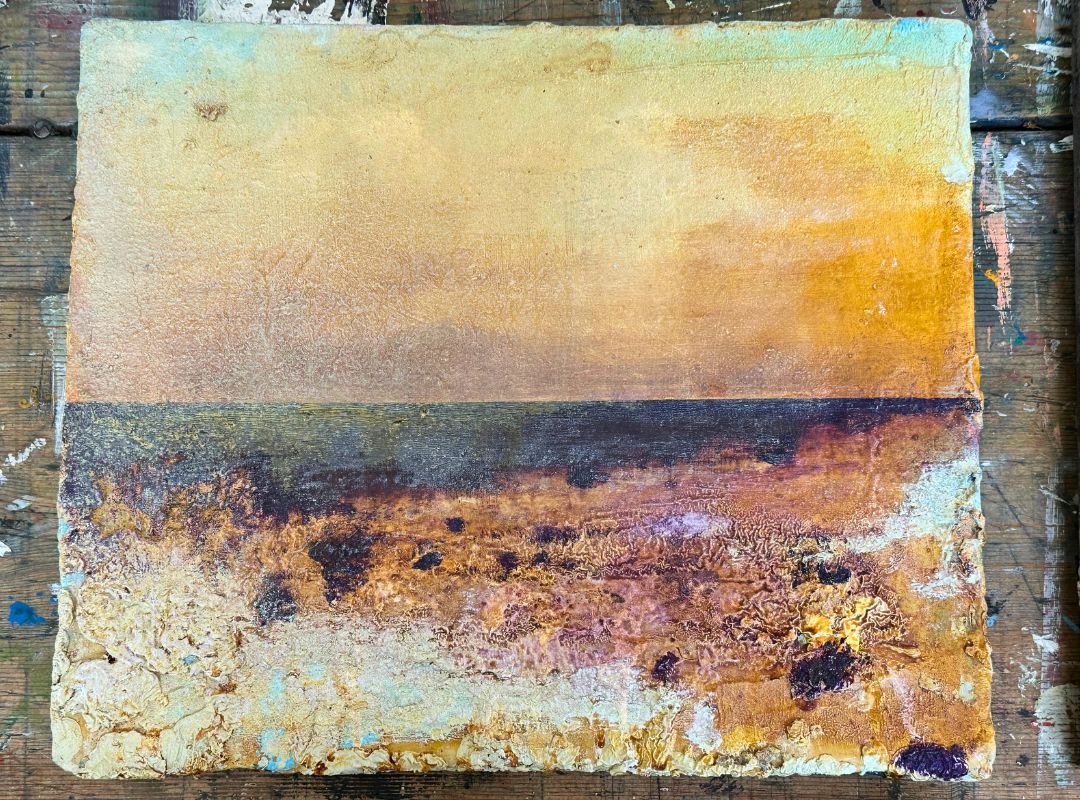
Luke Knight's paintings, showing layers of built-up paint spilling over the edges of the canvas.
Does an image eventually reveal itself to you, or do you go in with a strong intention?
There’s always an intention at the start. When facing a completely fresh canvas or board, you can be very free, but there’s usually a specific seed… maybe I’ve just come back from somewhere and have a particular shape, colour, or moment stuck in my head.
However, because of my process and because I work in the studio in short bursts, maybe 30 minutes to an hour rather than days at a time, things evolve. The original intention changes. A painting might feel jarring or not quite work, but something else starts happening. I might enter the studio with a plan to do a five-minute intervention on one canvas, but if I have more time and extra paint, that spills over onto other pieces.
The paintings emerge and develop until a point where the piece takes over. There’s a conversation that starts, and it guides you toward a direction.
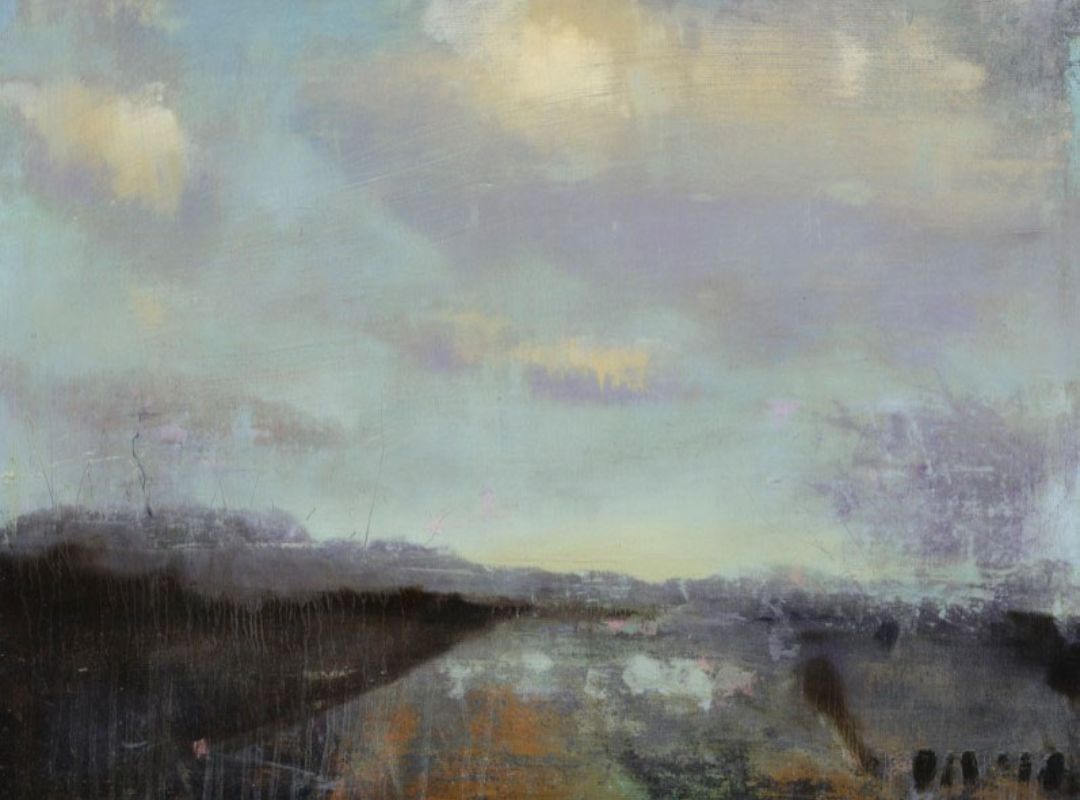
A painting by Luke Knight.
How do you know when a painting is finally finished?
At the start, you make big, invasive interventions. As things progress, the actions become smaller and more purposeful.
Sometimes, you go in with a clear final step, execute it, and say, "Right, that's done." Other times, it’s a battle. You keep working and tweaking until you just stop. After stepping away for a while, you look back and realise, "Actually, that’s where it needs to be."
Could you tell us a little about the paint that spills from the edges of your paintings?
That comes from scraping and sanding a lot—the paint naturally collects along the edges. As I work, I notice that building up. I’ll think, "I really like that, but how can I make it obvious to someone else?"
I love that the physical edge really tells you it's a painting. It shows a big scrape happened and preserves the history of what took place around the canvas. It turns the piece into something textural, something you want to hold and touch rather than just look at.
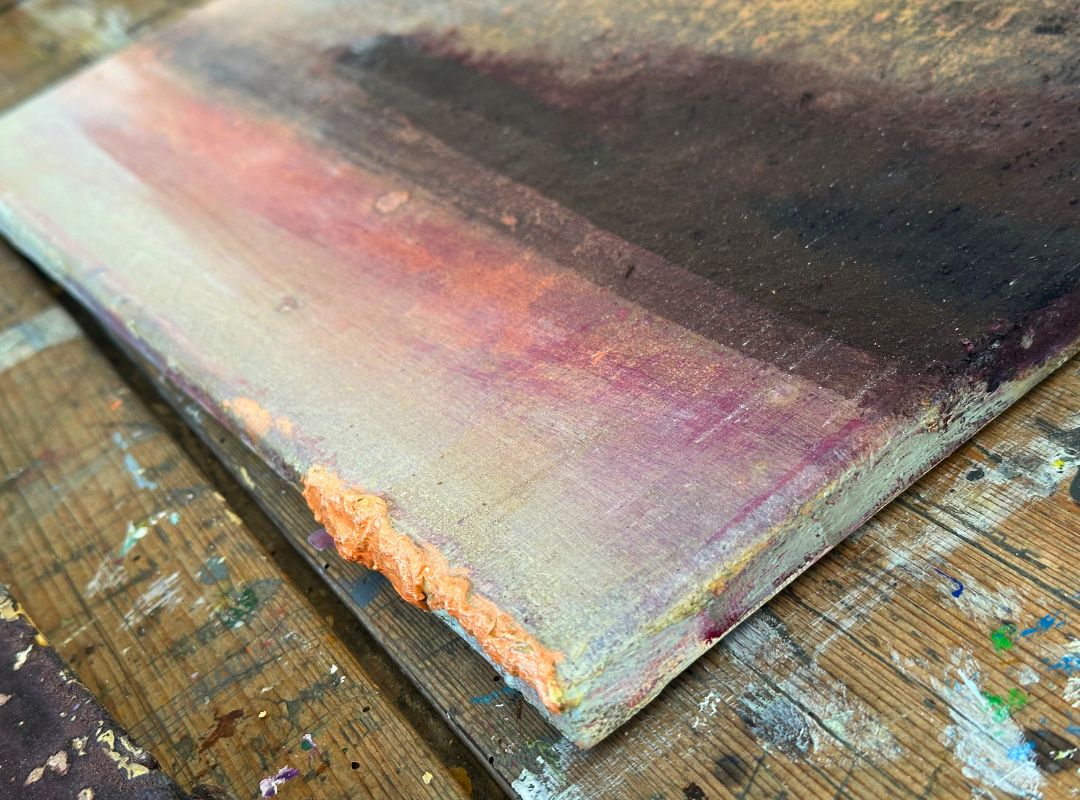
A corner of a Luke Knight painting showing a thick layer of peach paint, the colour of the glowing sky.
There’s one piece, with a really bright peachy colour gathered at the edge, and once I noticed it, I really saw that peach glow through the rest of the painting from within.
Yeah, what I want to capture in my paintings, like a particular light or the way the wind blows across the sea, I can’t fully capture that with, say, sketching or watercolour. I need the physical process of layering paint to bring that glow out.
Sketching for me is a separate activity. It’s an excuse to sit, be present, and notice things: feeling the wind, hearing the elements, or mark-making in response to the environment. I don't take a finished sketch and translate it directly into a painting; my paintings never look like my sketches. Instead, sketching acts as a memory aid. It forces you to sit, look, and absorb details like rocks or water.
Luke Knight teaches a three-day Expressive Landscape painting course at Newlyn School of Art. Find out more here.