"Don’t be shy. I want to hear every mark!" Artist tutor Rob Unett slams his hand down on the sheet of paper in front of me, crushing the stick of charcoal beneath. He blows away the excess dust to reveal a dramatic motif that you’d struggle to imitate any other way. I give it a go, enjoying the excitement of being encouraged out of my comfort zone and into uncharted creative territory.
Only two hours into this three-day abstract figure painting course and we’re already at full tilt. Every student is engrossed, freely experimenting with a huge mix of media and tools provided by the school: graphite pencils, pastels and conté sticks, felt-tip pens, crayons, chalk, charcoal, inks and paint. The student to my right, holding several paintbrushes between his fingers, dabs marks around his page; to my left, two students are wielding pieces of charcoal the size of small pineapples.
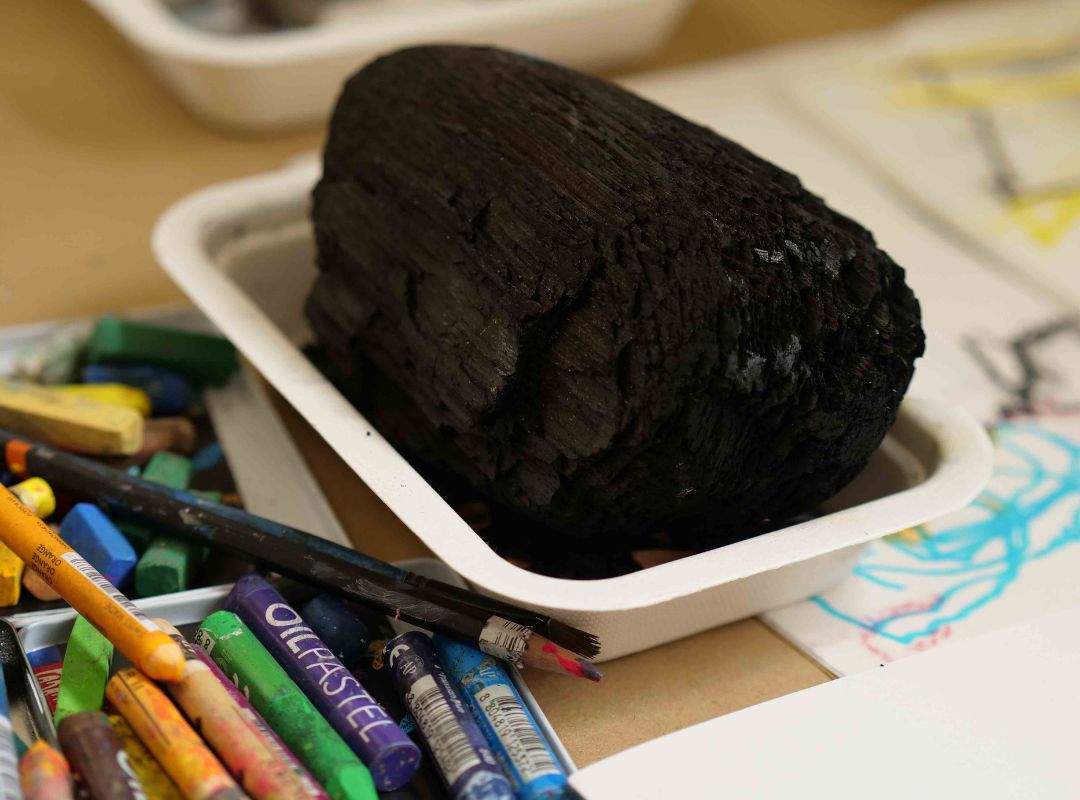
"Test every piece of media to its limit," Rob enthuses. "If you don’t, you’ll never know what it or you are capable of creating."
The studio is filled with the sounds of marks being splatted, scraped or ground into the paper. "It’s vital to really get to know your media," he continues "When we want to achieve a certain type of effect, but don’t fully understand what the media we’re using can do, we’re setting ourselves up for frustration."
Rob's accompanying playlist conducts the mood in the studio and the energy of our mark-making. We use bold, jagged lines with smooth, gentle strokes; tiny, fluttering patterns; then percussive, pointillist-style dots. We are building up a repertoire of marks – the beginning, perhaps, of a new visual language.
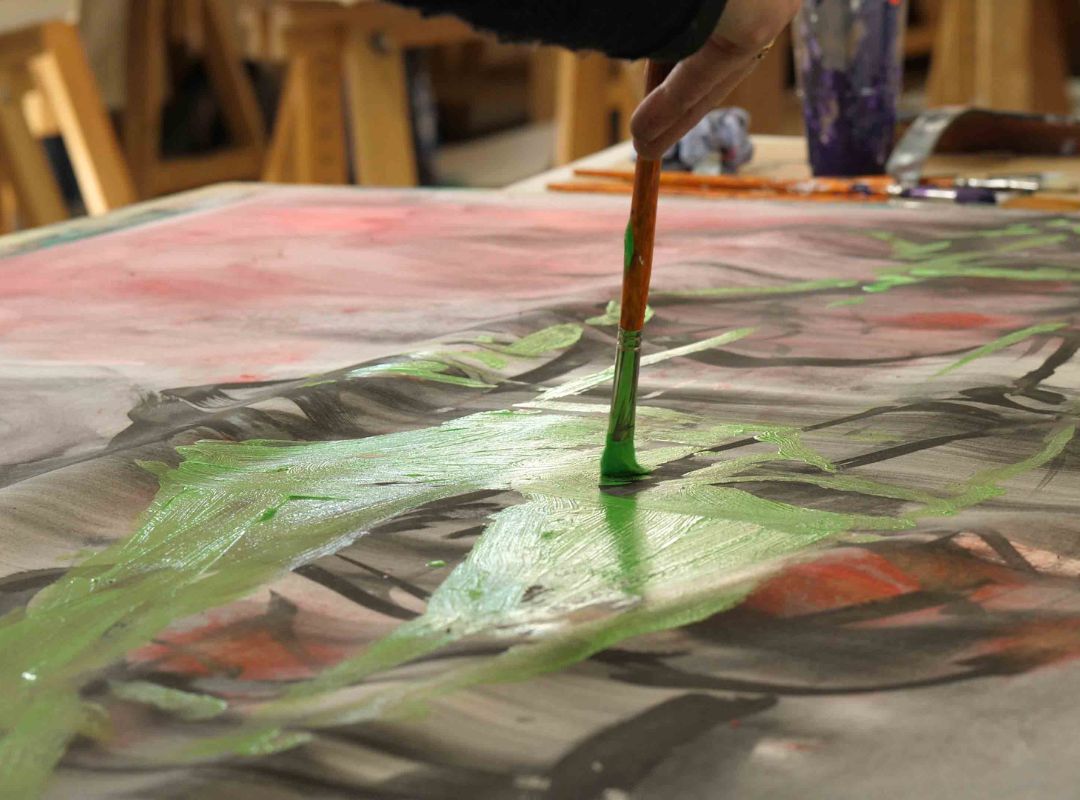
We quickly learn not to be precious about a drawing or a painting here. Instead, we are encouraged to immerse ourselves in the joy of playfulness and inquiry. We are finding a new rhythm of working. We use sponges, rags, squeegees, cardboard, paintbrushes, and our hands as our tools. It’s experimental and fast-paced. Each artwork evolves uniquely; sometimes it is messy, often it is intriguing. Very occasionally it’s beautiful.
"This course is designed to give you an experience of my processes and how I work in my studio. If you want to get the best out of this time together, take on the challenges I give you, allow yourself to go with the flow and expect to learn rather than to create something 'finished'."
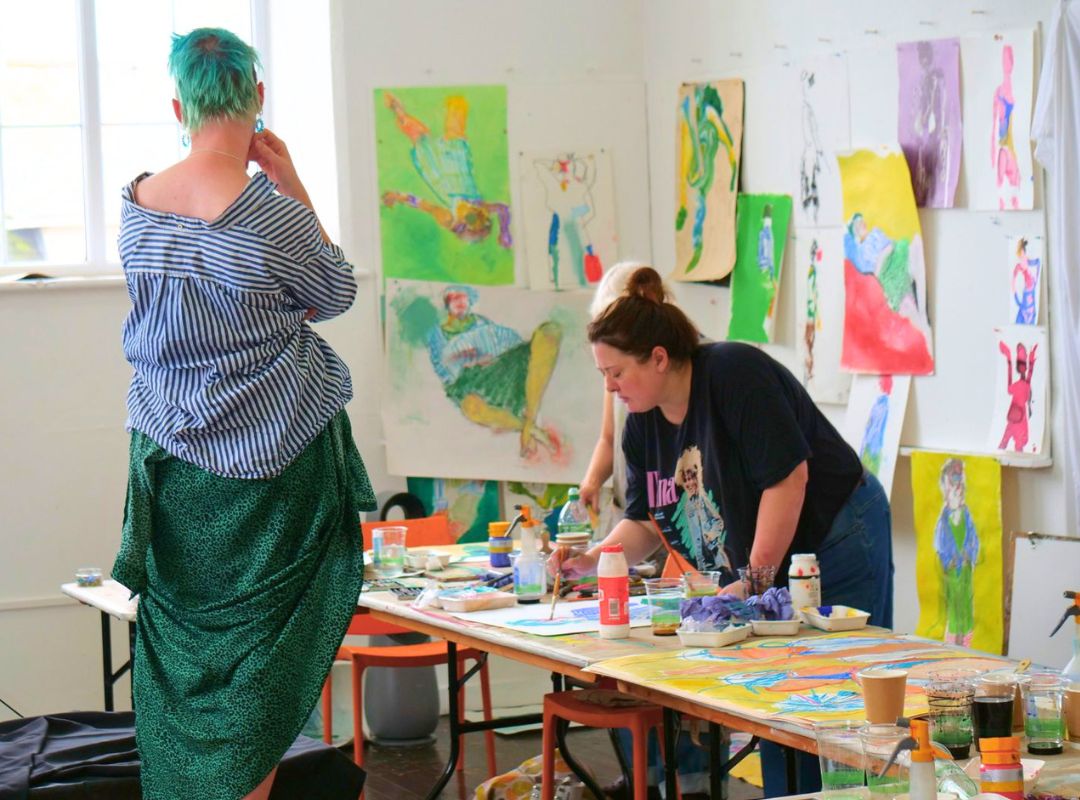
Rob Unett's understanding of the figure and his fashion background is evidenced in his styling of our model. Poses range from five to twenty minutes - any longer and we’d be trying to make our artworks too perfect or accurate. We're searching for a balance between figurative elements and abstraction. "We all naturally look for something we can recognise in a painting of a figure, no matter how abstract the artwork is," Rob explains as he demonstrates adding a carefully drawn eye to a pale outline of a face. "We’re aiming to create a connection between your artwork and the audience, giving them a few visual signposts so that they can imagine and create the rest of the figure in their own minds."
Just before we get too comfortable with a particular technique, we’re presented with another, keeping us curious and energised. We experiment with our non-dominant hand, draw with a knife, saturate our page before working on it, rinse things away, collage...
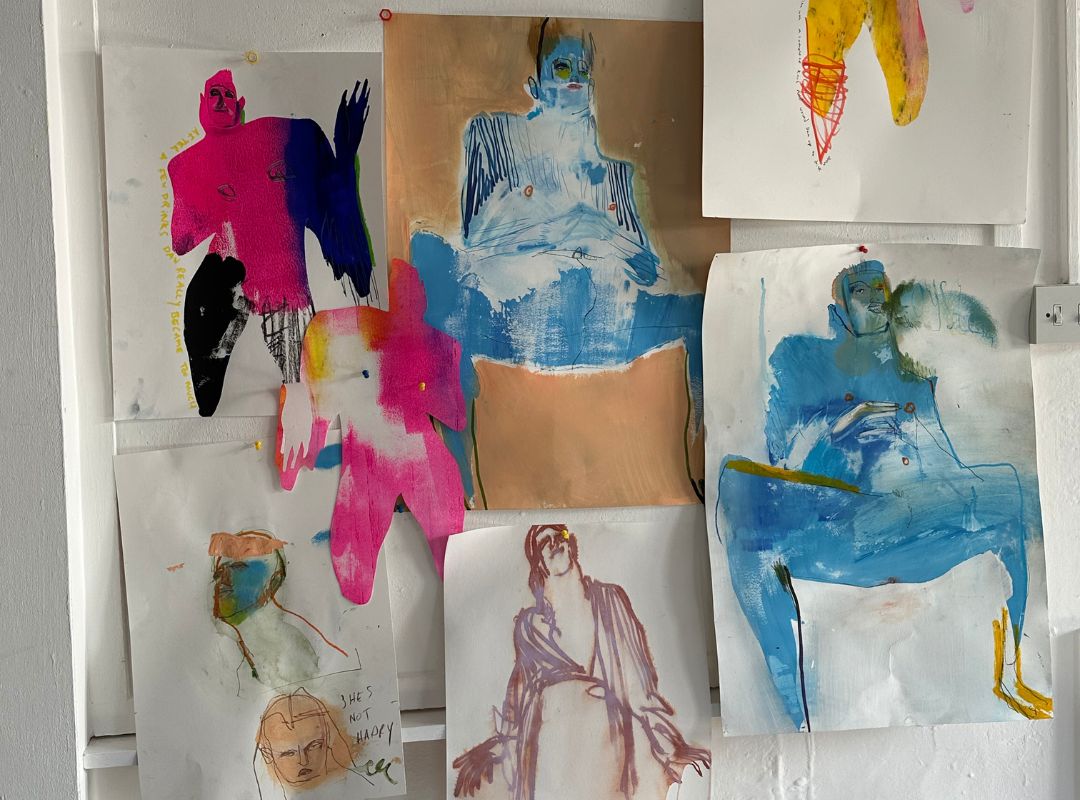
By day three we're encouraged to work on several pieces at once. Confused masses of lines and marks are quietened with solid blocks of colour to bring back a sense of cohesion and balance. We pin works on the wall as we go, and very quickly we are surrounded by hundreds of unique representations of our model.
It has been an enormously enjoyable three days. Inspired and exhausted, we take the time to reflect on the incredible range of drawings, paintings and collages that cover the walls. Rob encourages a group discussion, helping us to evaluate and process what we have produced.
.jpg "A Newlyn School of Art studio filled with brightly coloured paintings")
As we go, Rob reminds us:
"You can only grow as an artist if you challenge yourself, and practise constantly."
"And remember," he adds, "if an artwork doesn’t go to plan, there’s always another piece of paper."
Find out more about the 3-day course, Abstract Figure, here.
Written by Kari Herbert.