Landscape painting on location can be a very rewarding practice, though it can also present some challenges due to the ever-changing nature of the landscape and the elements. In this series, eight landscape artists from our Year-Long Online Landscape Course share their methods and top tips for landscape painting on location; from navigating colour to experimenting with composition, as well as tips on how to prepare your materials in advance for portability.
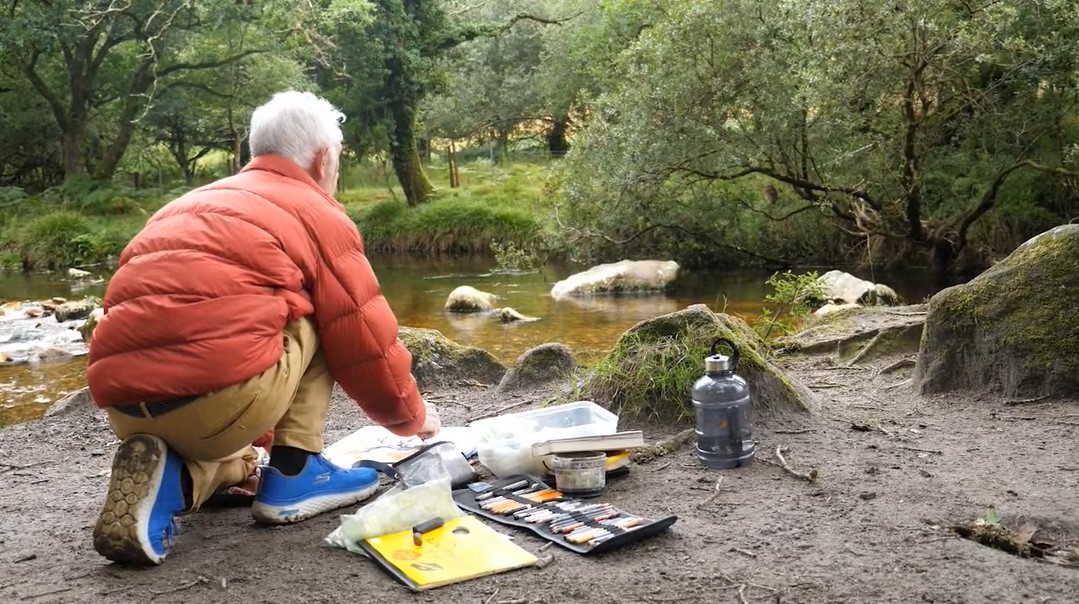
Mike Staniford on Dartmoor.
“I spend a lot of time travelling, both at home in Australia and abroad, and I return to landscapes that I have made a connection with. I have become fascinated with trees and they frequently feature in my work. They all have their own characteristics that are unique to each species and location."
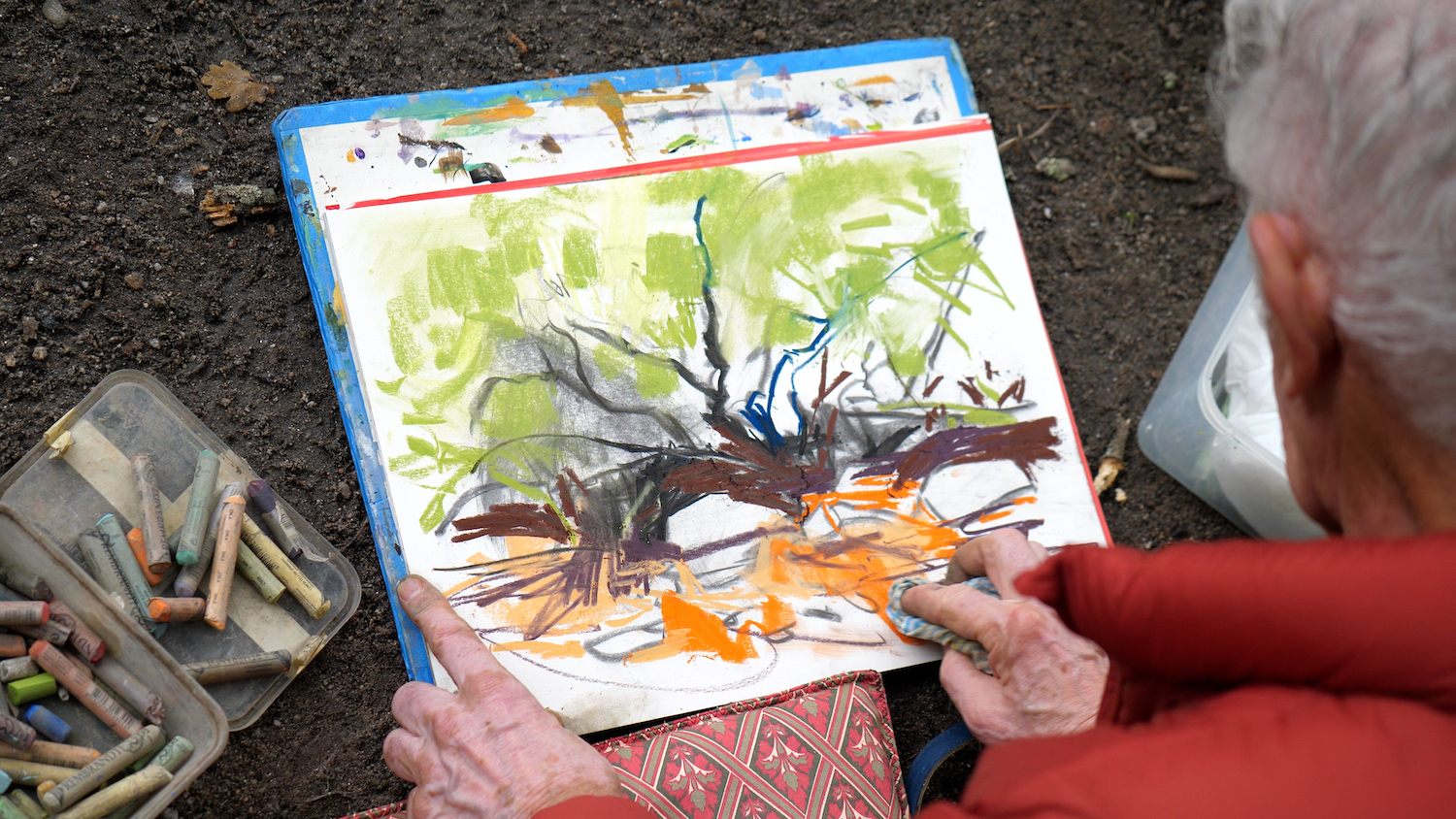
Mike working with charcoal and chalks.
"When I first arrive on location I will usually start by making a series of black and white charcoal drawings either in a sketchbook or on sheets of paper. I use these to warm up and re-familiarise myself with the place. The purpose of these studies is to capture information and then process and represent that information; changing elements and adding components to suit the composition. Putting things in and taking them out is all part of the editing process. Once back in the studio I use these charcoal studies and memory to make paintings. Working from memory is a wonderful thing, it’s amazing how a simple quick drawing can conjure up the time spent in a landscape. Colour is an entity itself, I use colour to present my own vision of the world.
I use watercolour or heavyweight paper sketchbooks, pencils, charcoal and rubber, acrylics with mediums, gouache, inks and pastels and Posca pens.”
Mike's Tips
- Try drawing with your non-dominant hand, the marks you get are less controlled and have a free and playful nature to them.
- Use a rubber to draw with when making charcoal studies, you are not “rubbing out” you are adding light.
- Take licence with colour. Be fearless and bold with it to capture the imagination of the viewer. Colours don’t have to be true to life.
- Try working on a brightly coloured background and leave some of it visible in your finished paintings.
Year-Long Online Landscape Course
The year-long online course has contributions from 16 respected landscape painters, each sharing filmed demonstrations. The artists have devised over 80 exercises for participants to complete alongside studio visits, professional development, and interviews. The pre-recorded course is delivered online over six sessions, directed and hosted by Anita Reynolds. The course is designed to be experienced from the comfort of your own studio/home, and with 18 months of access, you can really make the most of the wealth of information, exercises and tips from all of these respected landscape artists
Uniquely, the course also includes over 40 looped films of the locations these artists often visit for participants to paint from; of the coastline and moorland around Cornwall and Devon. There’s amazing drone footage, guidance, and countless tips on how to energise and improve your landscape painting practice.
View the Year-Long Online Landscape Course here.