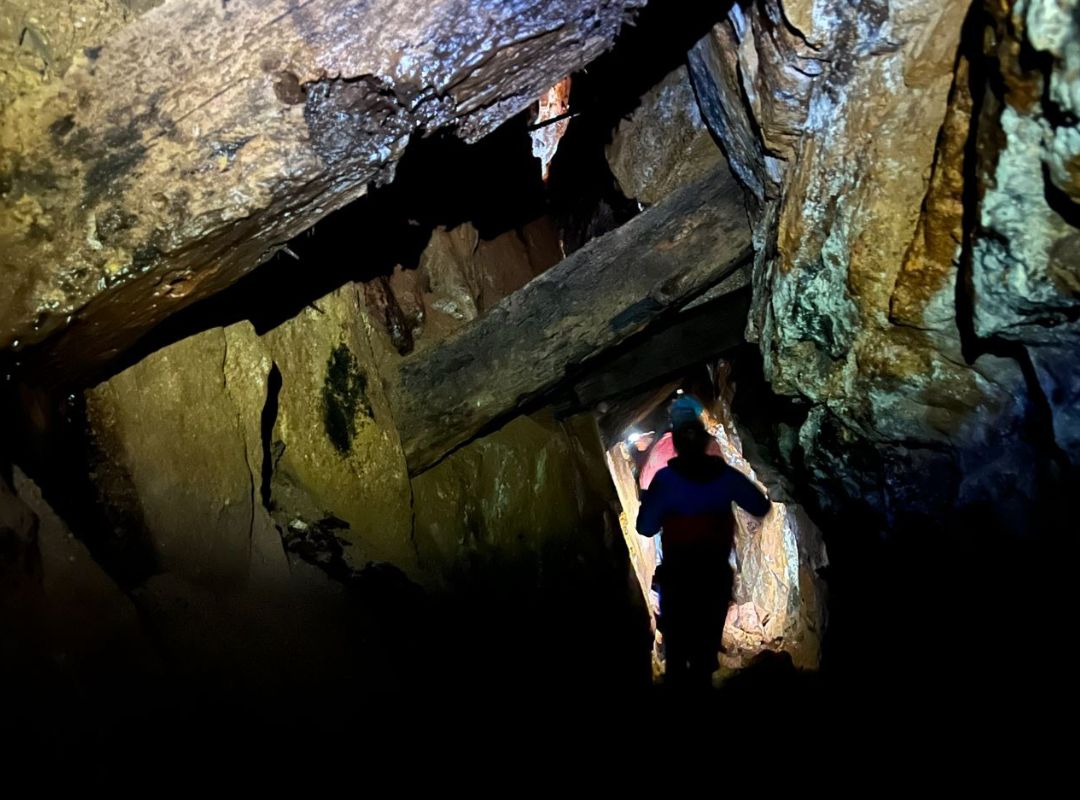
Image: Jethro Jackson exploring a Cornish mine
When did you first enter a mine?
The first time I explored a mine, it wasn't to find paintings. I just went with a friend because I felt like it was a good thing to start to understand this subterranean topography that’s so abundant in Cornwall. It was an adventure.
When you have an experience like that as a creative, it's almost impossible for it not to filter down in some way through to the work. And it did filter down- it more than filtered down! It took over for… two years? About two years. And the work had this sense of almost like a map, some sort of schematic map that transcended the subterranean over our vision.
It was a powerful experience, and it was a strong body of work, probably one of the most intense and largest bodies of work that I've achieved. They fell under a title of “Above, Below and Beyond”.
.jpg "Iron Ore, Rich, Jethro Jackson")
Images: (left) "Iron Ore" (right) "Rich", oil and gold on board, Jethro Jackson
The tools and colours, the number of times you went back into the work - were there practical things that you learned?
I did actually limit the palette. Obviously, the underground most of the time is quite a simple tone, earth tones, ochres, those sorts of things. But then all of a sudden, you get hit with something, fluorescence, and you get these unexpected colours which you just wouldn't expect to find underground. Incredible blues and intense yellows.
So, I started to use colour in vivid, strong moments in the paintings, but the rest of the painting sat in tonality, and that created that sense of pinpointing you. But also, it was meant to be that it moved you around the painting.
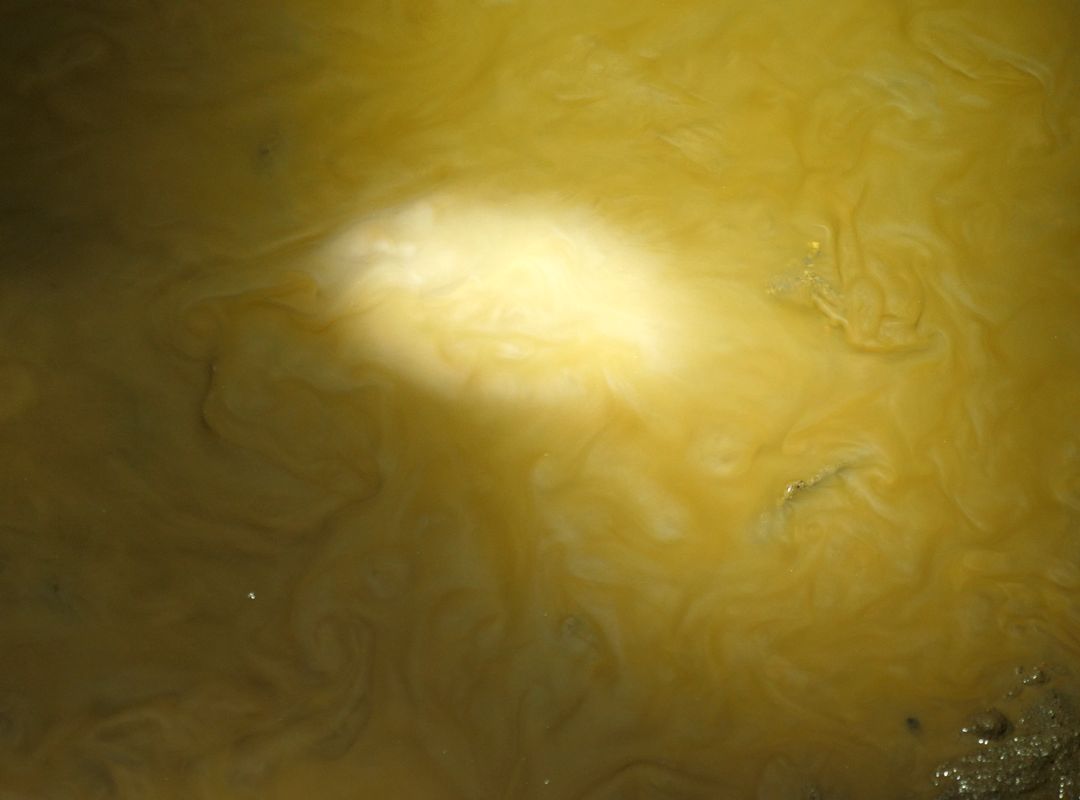
Image: Swirling muddy water below ground, shining gold in appearance.
Could you tell us a little about the new course?
Yeah, I think the key part is that this is an experience. It’s not about creating pictures directly from what we've seen underground. The reason for going underground is to enable pupils to experience, I would think, a new dimension to a space and a feeling of space. It’s quite difficult, unless you've been underground, to understand how quickly your world changes. It shrinks, it becomes intense, noise amplifies, your senses heighten.
That idea that the light level drops, and we really start to see things in more detail, even if it's only partially lit. I love all that. I think it's a great way to tune in as an artist to elements around you, stop and really look. I look for triggers when I'm out, whether it's a bird or something that holds my attention, and then I really stop and look at what I'm seeing. Obviously in here, the irony is you're "not seeing anything", but you are, and that's the point. That's what we're trying to achieve. It's going past the obvious visual, and finding what we're sensing.
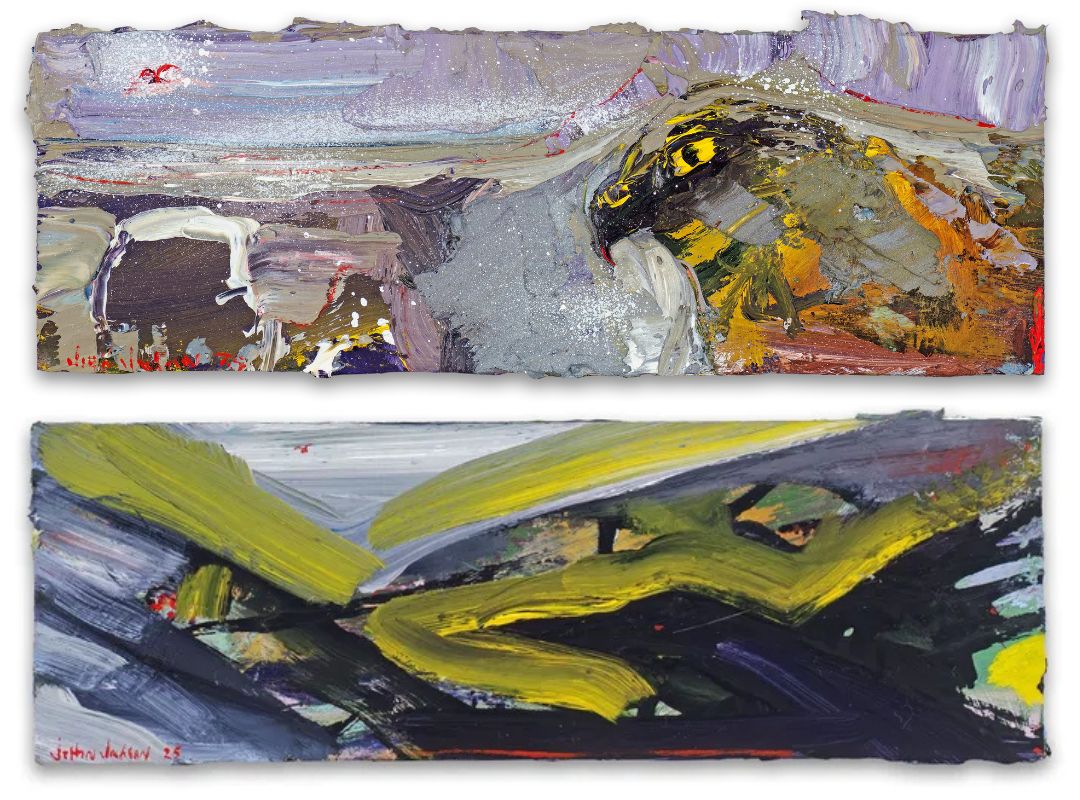
Image: (above) "Hawks Tor" (below) "Raven Head Valley", Jethro Jackson
And do you see the underground experience and the experiences that participants will have out on the moor as separate from each other?
I think the experiences will be vastly different. Going underground is a small part of the course. It's essentially a trigger and a new sensation, which means that when you go to make work, you have a new element, a new dialogue, something that's changed.
We can draw on those sensations. We can draw on so many things that have happened in there to overlay what is potentially a normal vista. Say we're painting the wonderful landscape we’ve got here - now we know what it feels like to be in that space. So, we take that, and we overlay it in some way. How we overlay it becomes the challenge, and that's the bit that we will be looking to achieve in the course.
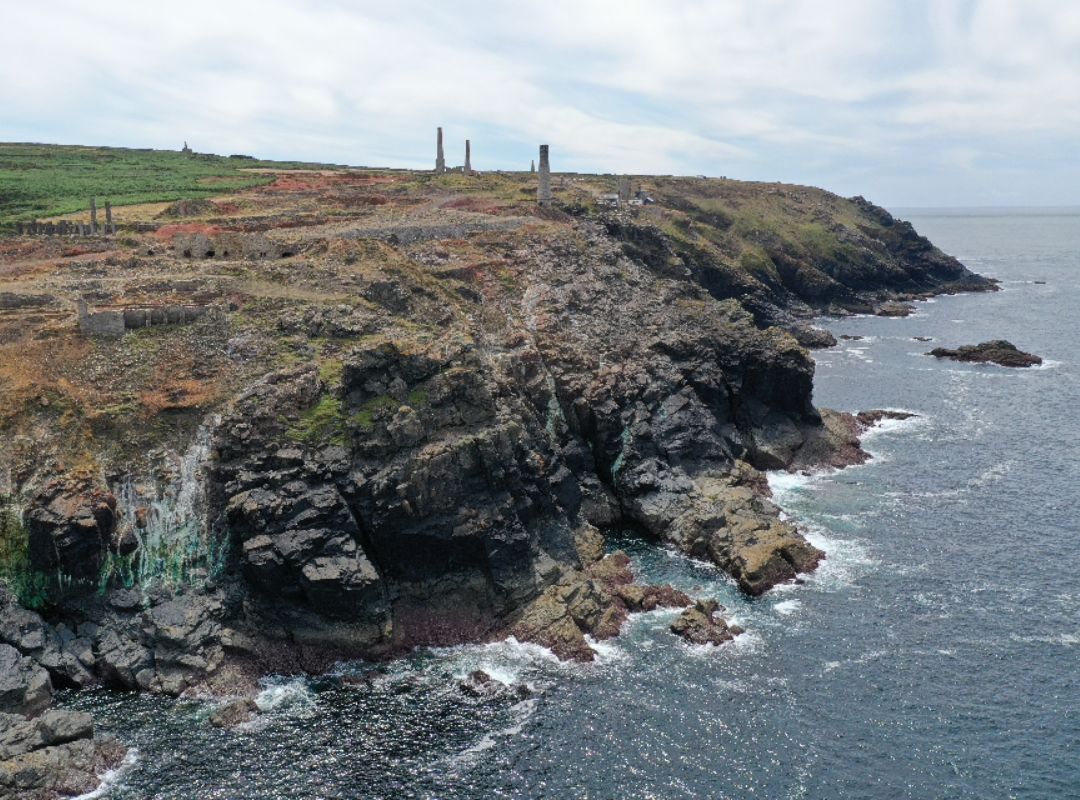
Image: a Cornish headland with visible chimney stacks and mine entrances
So, you’re helping participants to have new experiences, and they will find their own way to respond to that? Is that right?
I'm excited to see what people bring to it, and I won't be expecting them to work how I work. I'm here to give them a new toolkit, essentially, and to give them new experiences out in the landscape to draw from.
I want them to destroy work as well, because look at the destruction that's caused to draw something out of the earth to make something from. I think it's such a clear example of how destruction and creation sit so closely aligned. Those great moments in a painting normally sit just the other side of what you think is “okay”. So, it's about pushing. It’s quite a nice dialogue between pushing yourself as a painter and the physical push the miners made to find the next ore line.
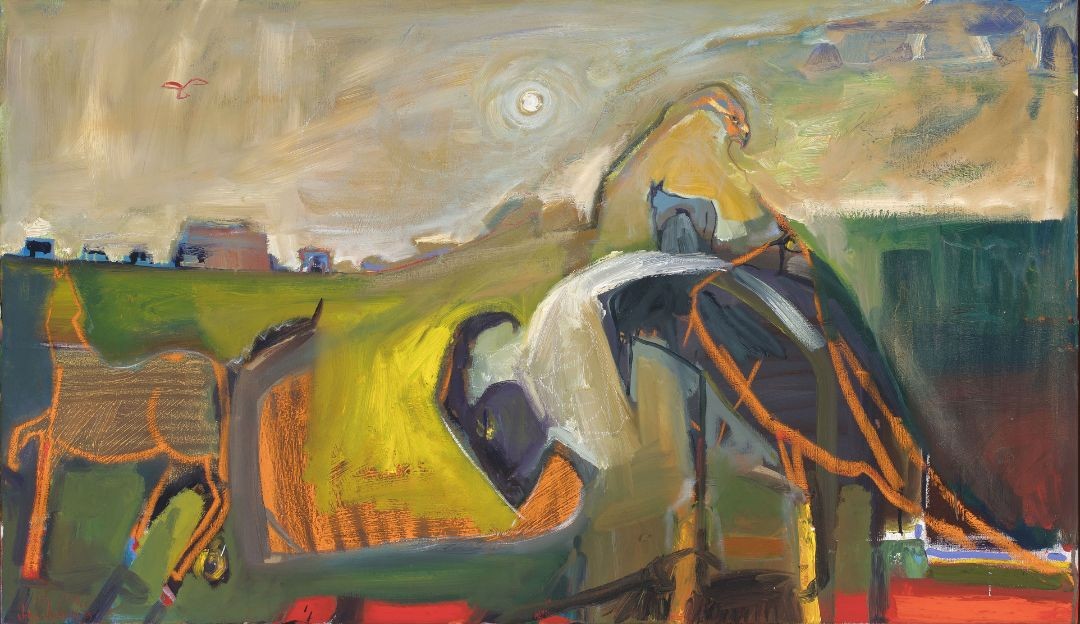
Image: "Convergence", Jethro Jackson
I think it's really important to understand, that in my mind, you can only achieve a drawing or an echo of what you experience here in four days as an artist. To then make a serious piece of work from this takes weeks. You have to live with it, you have to develop it. So, the idea of what we're trying to achieve is turbocharging that experimentation.
And what I love about that is you leave echoes. You leave history on the board, and those, I feel, are the only way you can start to get close to putting the time and timeframe in that is in our landscape. Because when you look at the landscape, it holds hundreds, thousands of years of history, obviously. But if we're talking about human interaction in that, it can be very subtle.
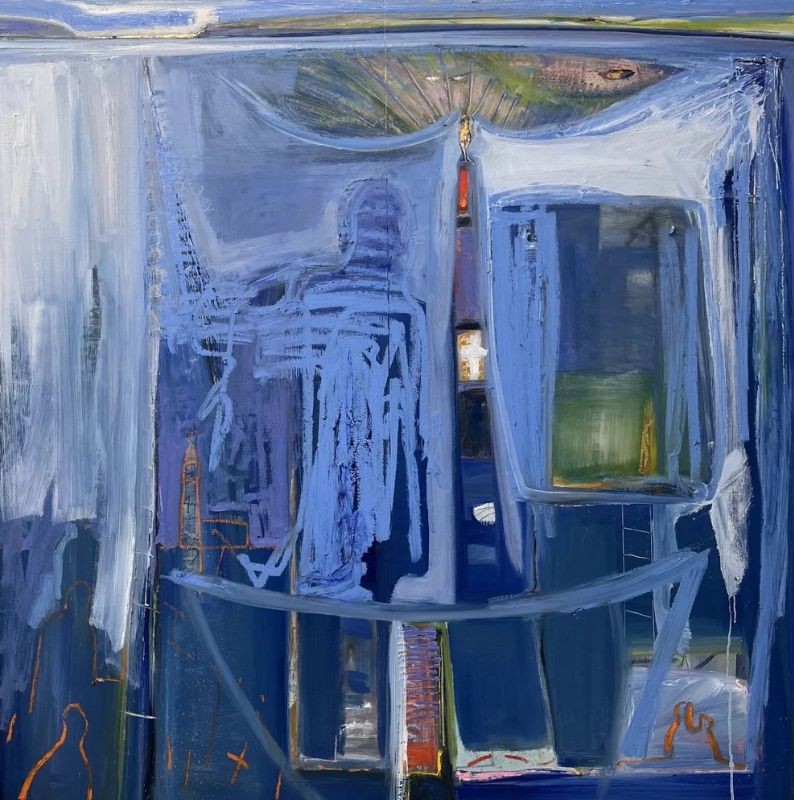
Image: A Painting by Jethro Jackson, exhibited in group exhibition Kaleidoscope
So how do you put those subtleties in?
I think they normally are found through chance, where you work something back, and you re-find a drawing or some colour that was once hidden, and those are great moments.
Beneath the Surface
This four-day course explores how story, history and myth can deepen your approach to landscape painting. Working between studio and site, you’ll move beyond what is immediately visible and develop a more personal, layered response to place.
As well as visiting the coast and moors, the group will visit an historic mine, where a local mining expert and historian will share insights into the industry's past and what it was like for miners to work underground. A guided visit into the opening of an ancient mine offers a powerful sensory experience — shifting how you think about space, time and human presence within the landscape.
Back in the studio, you’ll develop studies and experimental paintings that respond to these experiences. The emphasis is on process rather than finished outcomes, helping you build new methods that can feed directly into your ongoing practice.
Find out more here.