"Painting is about storytelling," says our tutor, Anthony Garratt, as we gather on a windswept cliff-top, clutching art boards, paper and graphite pencils. "It’s about capturing the essence of what’s around you as well as what you are feeling in that moment. It’s not necessarily about accuracy, in this course at least – it’s about interrogating your response to your environment in a particular moment in time. That response may be more than what you see visually; it may also include layers of feeling, atmosphere and history."
It's the first morning of our four-day Experimental Painting course, and after a brief introduction over fresh coffee, we head straight out to the wild Tin Coast – a location that is steeped in Cornish mining history. Disused engine houses and chimney stacks stand tall on the cliffs, with the restless Atlantic stretching ahead. This is the powerful atmosphere we'll be capturing on paper.
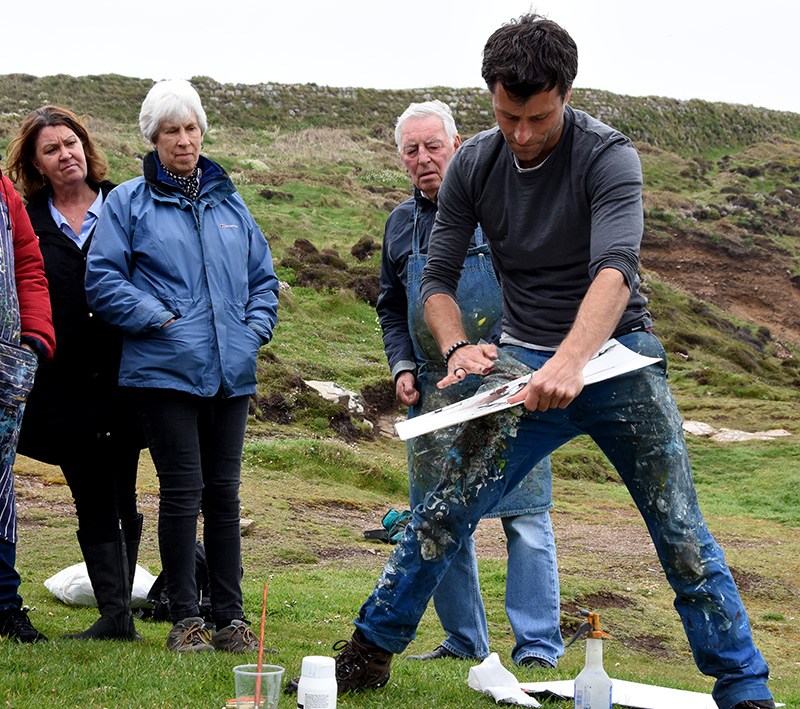
Anthony Garratt demonstrates expressive mark-making in West Penwith with Newlyn School of Art.
First, some warm-up exercises. We draw quick, intuitive two-minute sketches, gathering a sense of the land in a few dynamic marks. We gaze at a spot, turn the other way and sketch from memory. This way, we are recording the elements important to us. We make single-line drawings using a variety of strong and delicate marks, and even attempt to notate the soundscape before introducing paint.
Anthony demonstrates how a few confident gestures with paint or charcoal can immediately evoke a sense of this landscape.
"We’re not attempting to depict this place accurately," he reminds us, "Instead, we’re beginning a conversation with it and trying to find a language in our marks and materials that speak to the stories this place could tell us."
We use wide brushes with water-based oil paint, overlaid with a mixture of hard and thin lines in charcoal or graphite. Next, we experiment with scattering earth onto wet glue (not taken from this protected location), to understand how found materials from site-specific locations can physically and literally inform our work. The scattering of earth and the muted pigments contribute to the gritty feel of this atmospheric landscape.
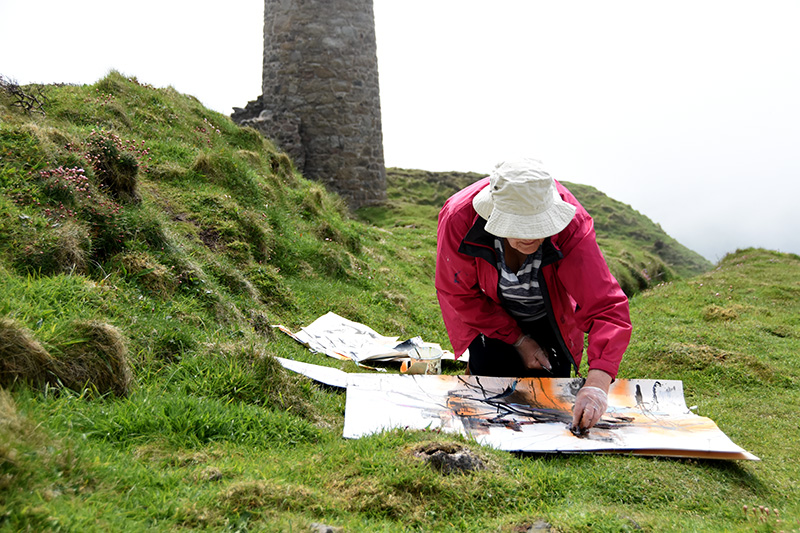
A student gets creative at Botallack
Back in the studio, Anthony Garratt demonstrates how to bring our sketches into new works using monoprinting techniques and introducing new media such as copper and iron dust to further play on the materiality in our paintings.
This experimental style of working is new to all of us. We were drawn to this course to loosen up, try new things and throw fastidiousness to the wind. Anthony is always on hand, boosting confidence and offering constructive, positive suggestions.
A leading contemporary artist and keen environmentalist, Anthony Garratt is the perfect guide for this course. His work evokes a visceral sense of place, whether he’s describing storm-whipped seas, remote mountains or chic Californian pool-sides and tropical beaches. His choice of media is varied and plentiful: oil paints, inks, iron filings, soil, pastels, charcoal and chalks, spray paint and more. His chosen materials and style reflect each landscape.
"Sketches and studies made in situ are just the beginning," he tells us. Each contains the potential for as many as ten or twenty further pieces of work which evolve from our memory and our responses to these initial impressions. The results become an entity all of their own – reminiscent of an initial sketch, but never wholly representative of one place.
In contrast to the earthy greys and browns of the first day, day two offers an opportunity to experiment with a radically different palette. First we visit local subtropical gardens filled with rare trees and exotic plants, then a pine forest, where we try to capture the structure of the trees and the movement of the canopy above.
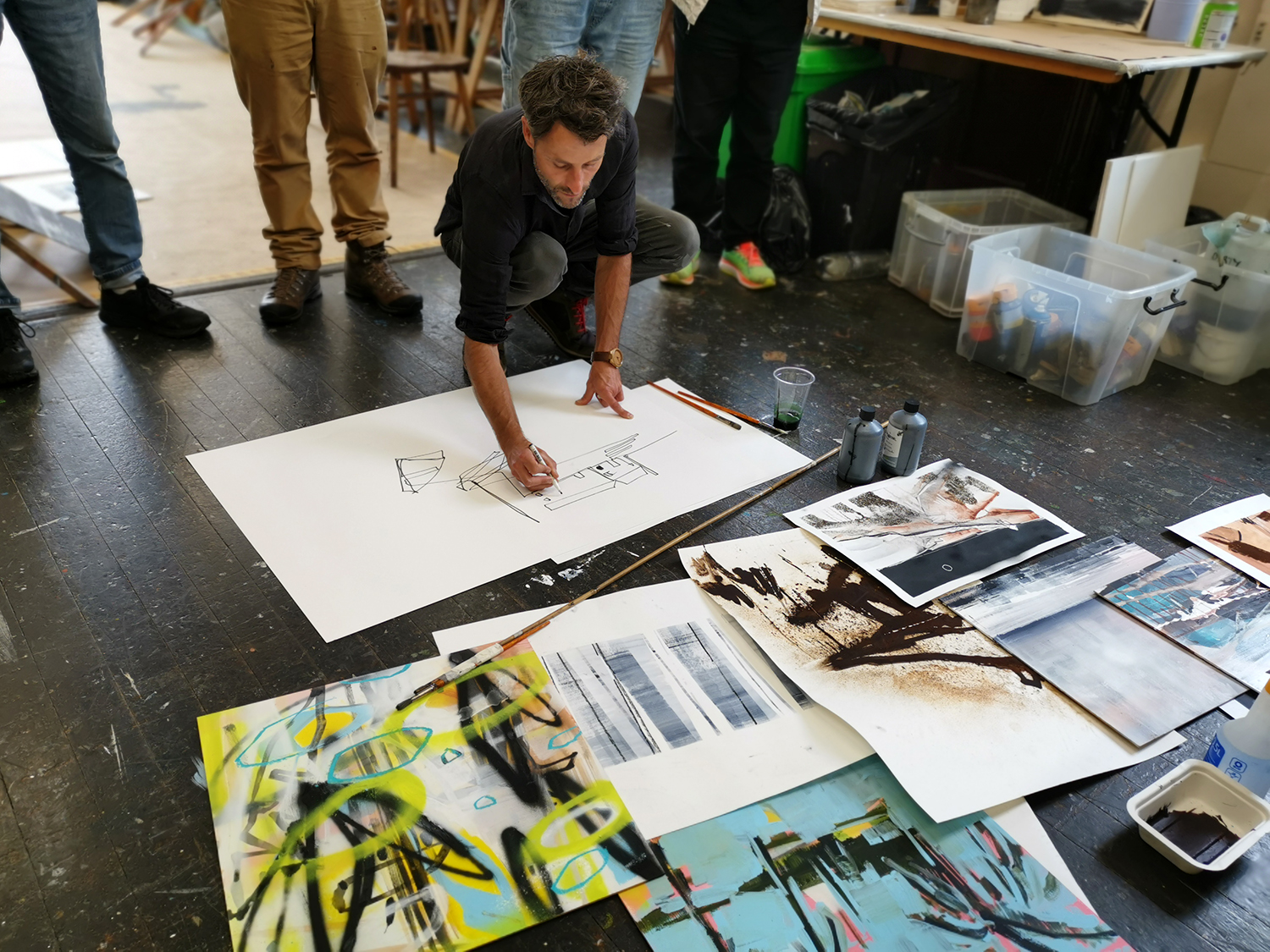
Anthony Garratt showing how studies can be developed in numerous ways in the studio at Newlyn School of Art
Back in the studio, Anthony Garratt demonstrates more techniques. He masks off areas to create evocative layers of tone, then pours and drips white gloss over dark abstract shapes or energetically sweeps neon paint over the top, capturing the vibrancy of tropical flowers and foliage or a maze of monochromatic trees.
"All this alchemy happening with these painted layers is quite exciting," he says as a piece seems to take on a life of its own. "Let the paint do its thing – don’t be tempted to interrupt it. Then when it’s dry you can go in and refine it. Most of all, just enjoy the process."
Anthony’s enthusiasm is infectious. We gamely follow suit: pouring, spraying, and scraping paint onto prepared boards, working on several pieces at a time.
"Think of the geology of your paintings," Anthony suggests. "Keep evaluating what meaning you’re tapping into – find the layers of history, colour and feeling and then tell that story." We’re encouraged to be bold with our use of dark and light areas, and to constantly step back to see how we can develop or pare back areas of our work to find a balanced composition.
The next two days follow much the same structure: creating studies on location, then developing our work with new techniques back in the studio. We use monoprinting and photo-transfer techniques, move paint with squeegees, rags, palette knives, and brushes taped to long bamboo poles. The atmosphere fluctuates from quietly focused to playful and lively throughout the few days.
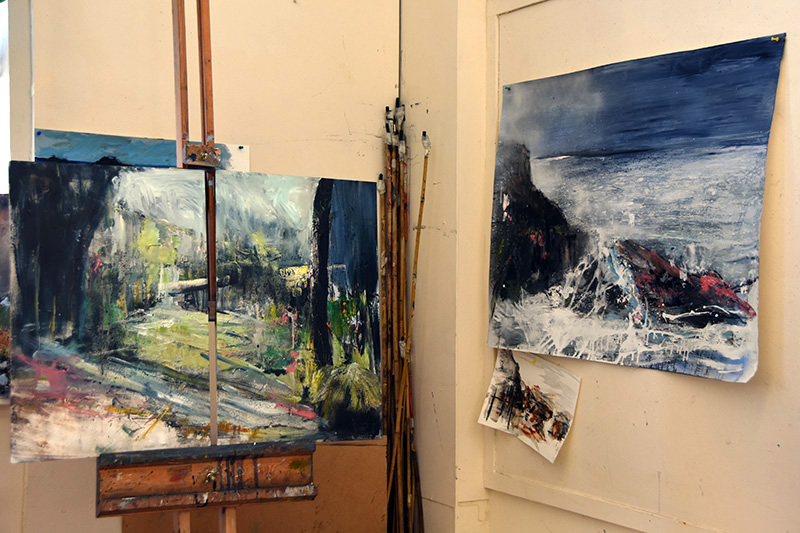
Student work from the Expressive Landscape course.
By the final day, each one of us has gained confidence in using texture and narrative in our work. At the end of the four days, we sit together for a final cup of tea and congratulate each other on our progress. We’ve amassed a worthy amount of sketches and paintings and have come away armed with a wealth of new techniques. It has been an inspirational four days, during which I have grown exponentially in my ability to creatively respond to a landscape. Judging by the laughter and the bulging portfolios of my fellow participants, I think it’s safe to say they feel much the same way.
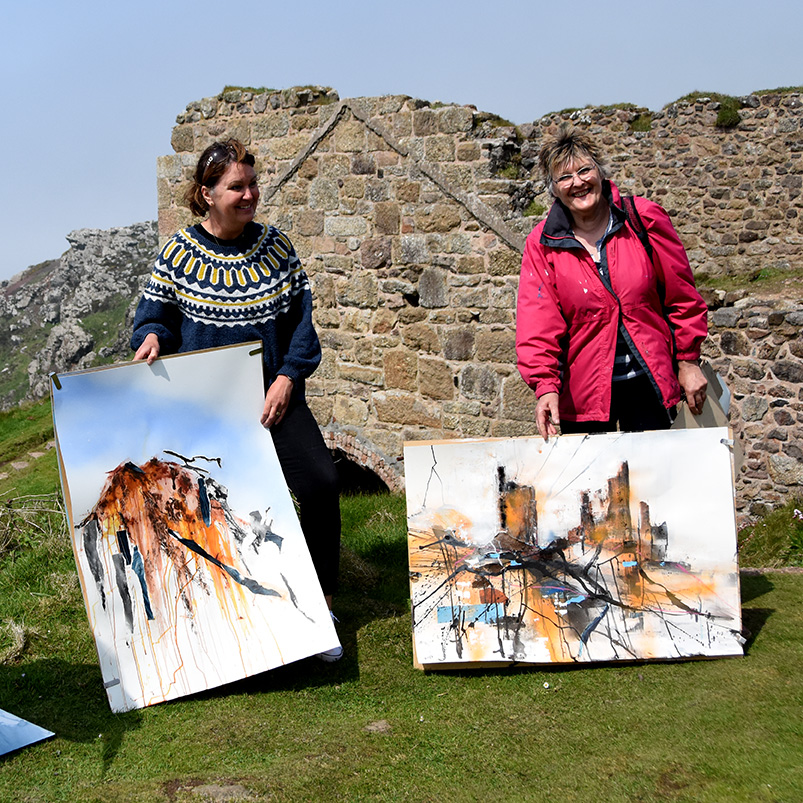
Students show off their work at Botallack.
- Words and images by Kari Herbert
Join Anthony Garratt on his next course by clicking here.