It’s a crisp February day: a gentle breeze in the air and golden winter sun, perfect for painting outdoors. I take in the view of purple gorse covered fields, typical of West Cornwall, and climb over a few boulders to a muddy track. As I make my way I feel that spark of anticipation I get when I've got a few hours all to myself to be creative.
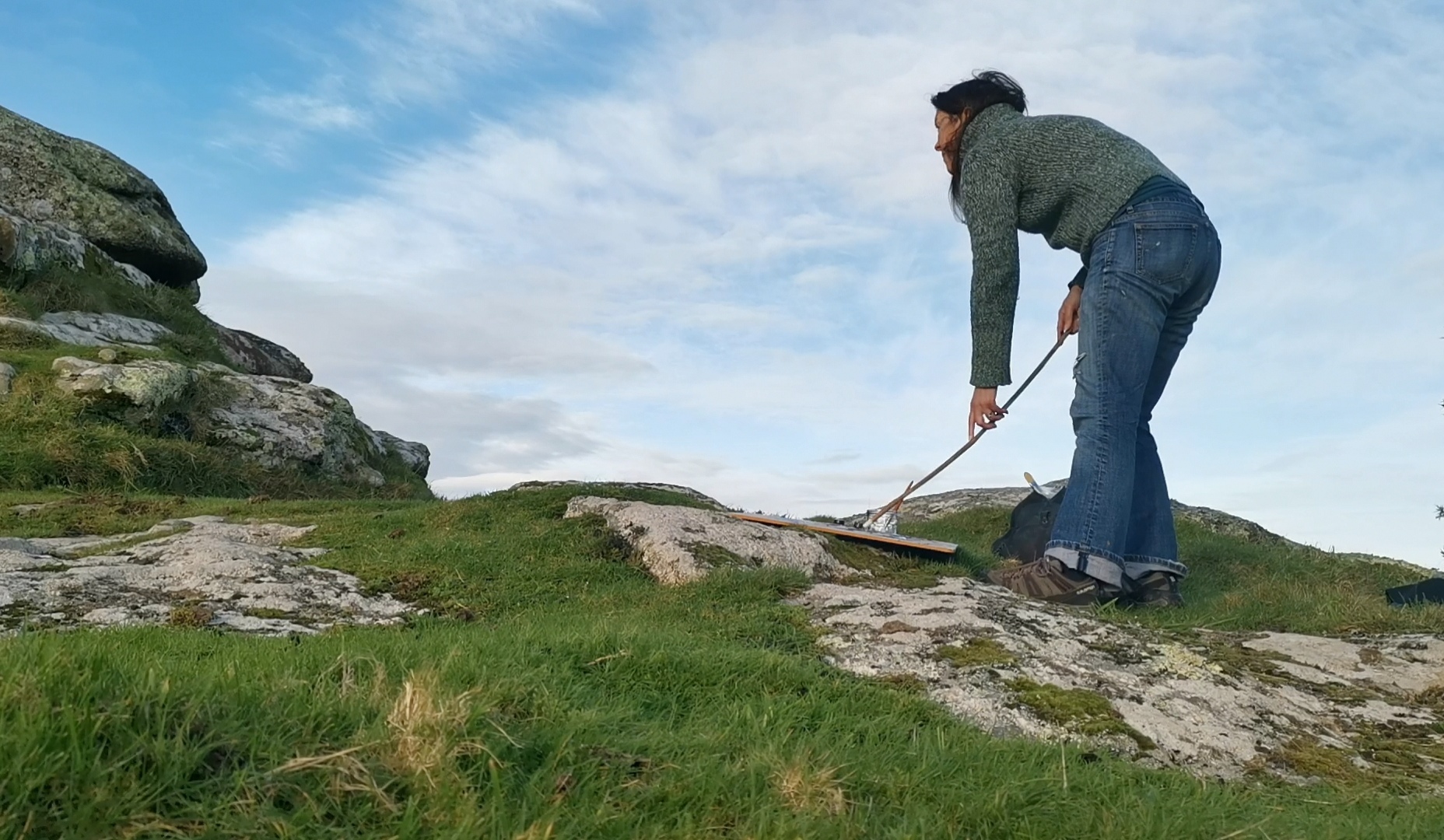
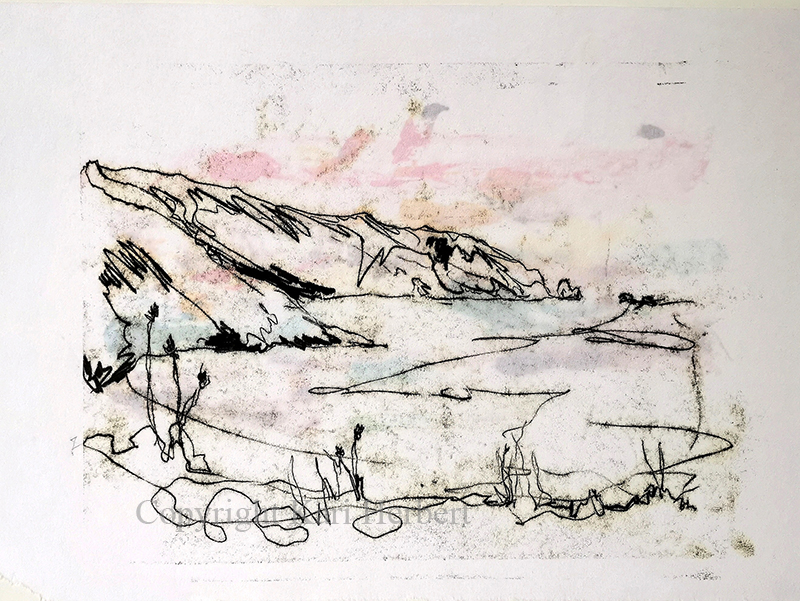
I settle on a scene of high moorland, where the granite outcrops peek through the green fields beneath the sky - a view that would stop anyone in their tracks. This is the perfect place to set up camp and test out some of the new techniques I've learned during my time with the Year-Long Online Landscape Course.
I have all the artist materials I need: a drawing board with several pieces of paper taped to it, two bamboo canes with charcoal, chalk, and pastels taped to each end, some inks and tubes of acrylic paint. I'm tempted to dive straight in, but remember the advice of Lead Tutor, Anita Reynolds.
Anita shares the importance of taking the time to engage with the landscape before you put pencil to paper. Explore the different viewpoints, ground yourself and tune into the key elements that capture your interest and offer inspiration.
I lay a hand on the cool granite and think of it's solidity and perminence. I notice how shadows flicker as sunlight comes and goes; how the clouds gather and disperse, and how the dry bracken dances stiffly in the breeze. Beneath it all is a sense of Cornish history, geology, and time.
Now that my senses are wide awake, I pick up a charcoal-tipped stick and set to work.
The introduction to materials, mark-making and artist tools is a helpful reminder to artists of all experience to develop their own visual language through experimentation. Anita Reynolds’ approach is innovative and playful. Her exercises help loosen things up and get into a creative flow.
Learning to communicate with this new and unweildly tool in the great outdoors completely absorbed my focus. The resulting sketches were lively, and filled with movement. They were an abstract representation which captured that particular moment in that particular place, experienced only by me: unique and personal.
I gather my things and head home, filled with vigor and excited to work further.
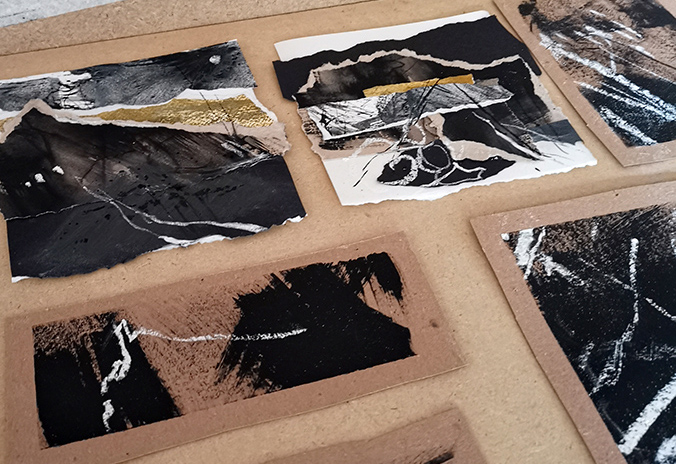
My home studio is a dedicated corner of my garage, but it could just as easily be a kitchen table! I set up my laptop, and spend the afternoon watching Anita's demonstrations, and playing with collage, layering and mark-making in response to the drawings made during my recent excursion. Maybe these will become the composition for finished paintings, maybe not. What matters is the exploration and lessons learned during the journey.
From the first lesson you’re invited to form a rhythm between place and process, gradually building familiarity with materials while tuning into the parts of the landscape that most intrigue you. Anita is a warm, comforting and encouraging artist mentor throughout the year of guidance, joined by a roster of experienced artist tutors from the Newlyn School of Art who share valuable insights through demonstrations, interviews and studio tours.
In one section, we're led by artist Paul Lewin into the Cornish countryside, where he creates dynamic and expressive paintings using watercolour with unruly brushwork and bold colour. Each tutor offers practical tips on their approach to composition, connection to landscape, and translating personal experience into artwork.
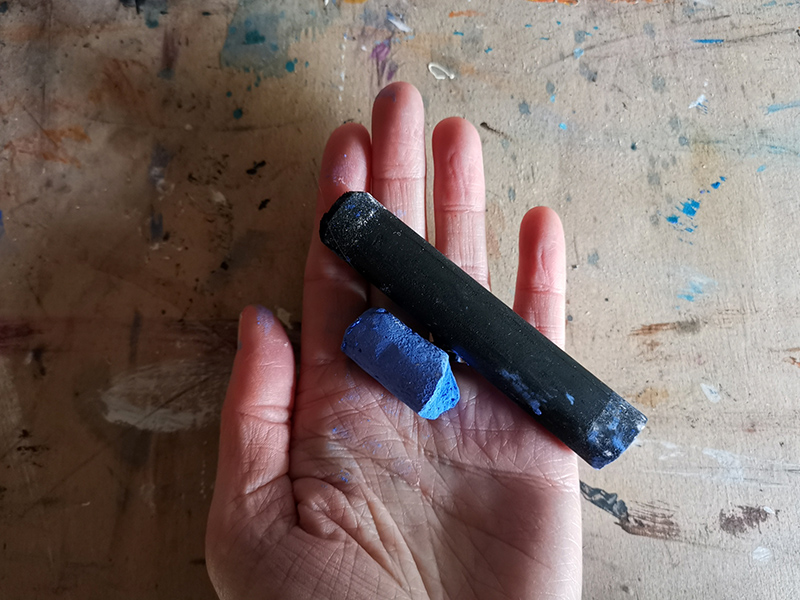
Dan Pyne leads an insightful session on working with natural materials, and how to make your own paint, ink and pastels with pigments foraged from your local area. It’s a different quality of experience using pastels and paints you have made yourself. It is immensely rewarding – alchemical – and can become an integral part of the narrative of your work.
For those days when you'd prefer to work indoors, or if you don’t have easy access to a landscape which inspires you – the course provides plenty of high-quality images and looped videos from beautiful Cornish locations to work from. You’re also encouraged to make your own location videos as reference for studio work.
Anita Reynolds places strong emphasis on process: creating small studies, playing with collage and monoprinting, experimenting with colour palettes and surfaces. We’re encouraged to rework pieces, to paint over sketches, to start again. Every exercise is a building block, no matter where you are in your practice.
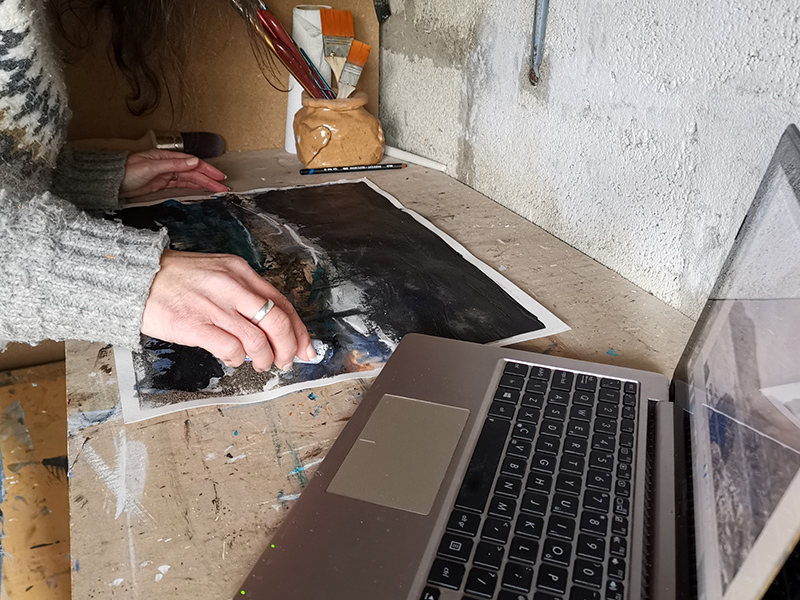
Newlyn School of Art have created a truly generous course designed to keep you engaged for 12 months of development. With 18 months of access, I'm able to dip back into previous sessions as and when I please.
As the course progresses, I find that painting becomes more central. Artists like Jon Doran dive into colour theory, refined palettes and tonal studies. Others, like Imogen Bone and Maggie O’Brien, share their studio routines and outdoor approaches. Each artist has a distinct and unique visual language, but are linked through a deep love for their practice.
What I appreciate most about this online art course is the flexibility. The videos are there when you need them; the outdoor tasks can be as simple or ambitious as you want them to be. You can follow the structure closely and easily return to the parts that particularly sparked your interest.
At its heart, this is a course about process. It encourages you to work steadily over time, shows you how to make thoughtful decisions, and how to build a sustainable practice. Whether you’re painting on a hillside or working quietly in your studio, the message is the same: observe, respond, and keep going. Over time, you’ll hone your skills and find your own way of seeing and interpreting the landscape.
This is part one of my experience. In my next blog, I’ll explore the second half of the course, where colour and texture take centre stage.
- Kari Herbert
Find out more about our Year-Long Online Landscape Course here.