Landscape painting on location can be a very rewarding practice, though it can also present some challenges due to the ever-changing nature of the landscape and the elements. In this series, eight landscape artists from our Year-Long Online Landscape Course share their methods and top tips for landscape painting on location; from navigating colour to experimenting with composition, as well as tips on how to prepare your materials in advance for portability.
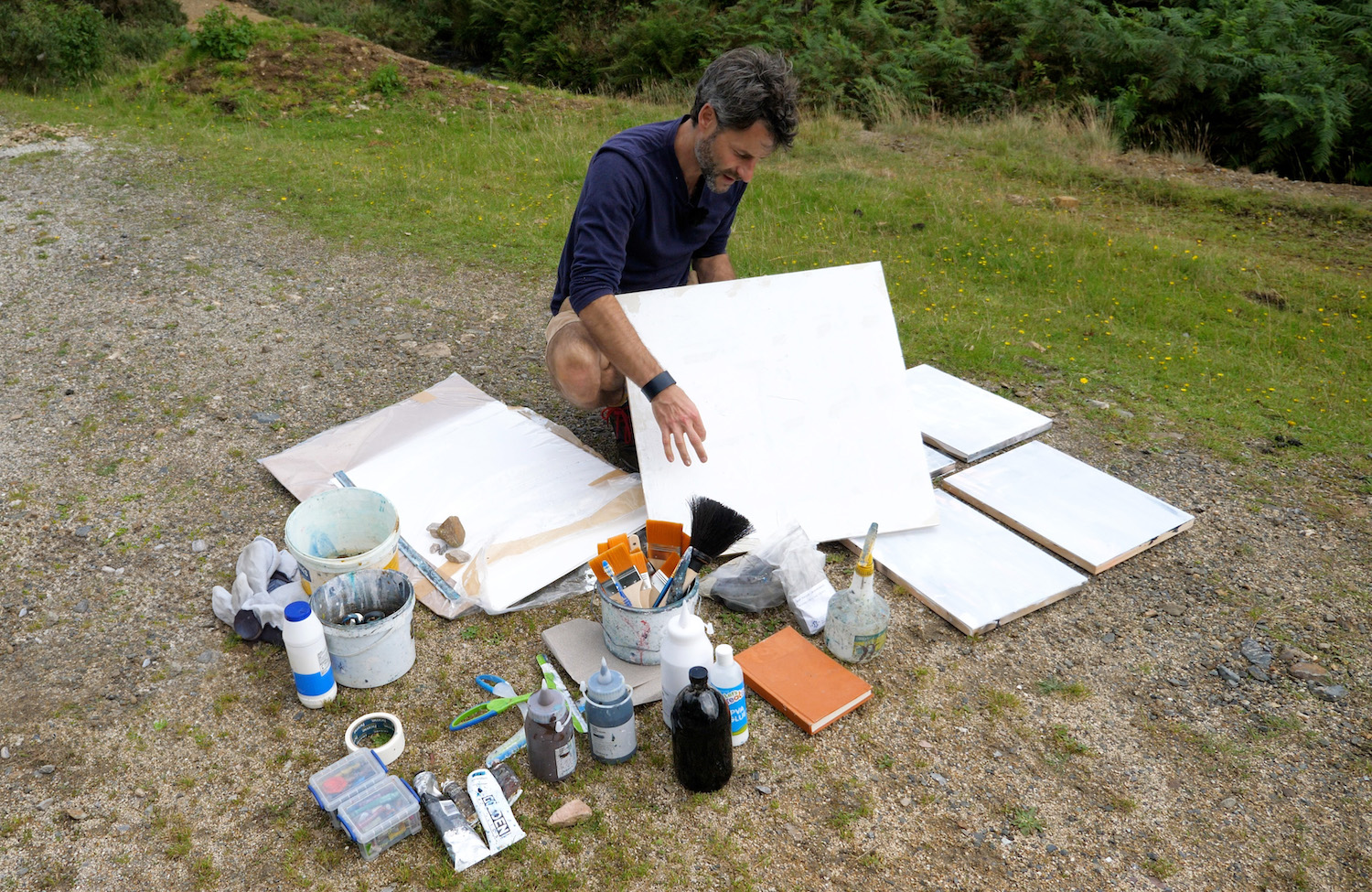
Anthony Garratt preparing supports on location.
“When visiting a new landscape I do some research before I go. I need to understand what has led me there and why it is of interest to me. I can then decide what materials are appropriate to take out with me. For quick oil paint studies I use Arches Oil paper. For a more durable surface I use primed canvasses and plywood panels. Materials I use include acrylics, oils, inks and spray paints with a wide range of brushes, plus more unusual tools such as tar brushes and shower squeegees."
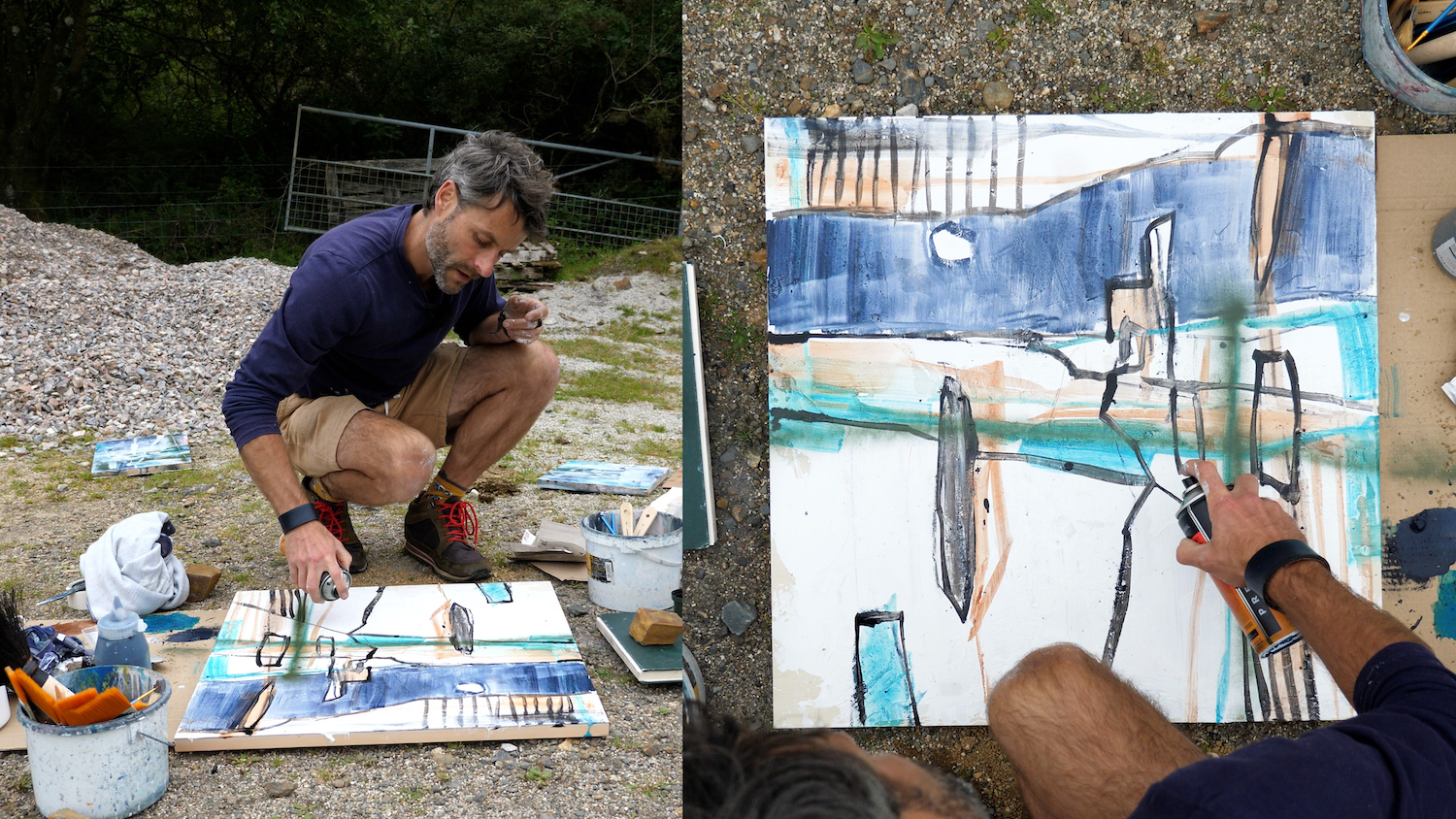
Anthony Garratt painting at Wheal Betsy, Dartmoor, Devon.
"On arrival I take time to walk and think, in a notebook I make a list of simple words and reactions to the place. I then select one or two of these “drivers” to inspire my painting route. Next I make a series of rapid continuous line drawings and paint studies, these are the marks that might form the base of a painting or be the completion of it. I rarely use sketchbooks, I make my first marks directly onto the supports. The purpose of working on site for me is to get the marks and impulse of the place down to an extent which is not possible in the studio. There is plenty of time to make a painting."
Anthony's Tips
- Use old paintings or drawings and prime over them to create an interesting textured surface.
- Go for quantity and diversity. These onsite studies are not meant to be beautiful, they are a collection of ingredients for a potential painting.
- Keep your lines and marks fluid and responsive whilst thinking of what the landscape is saying to you.
- Make lots of starts, don’t hurry to ‘finish’ your work at this stage. Let them rest for a while before making a decision on what to do next.
Year-Long Online Landscape Course
The year-long online course has contributions from 16 respected landscape painters, each sharing filmed demonstrations. The artists have devised over 80 exercises for participants to complete alongside studio visits, professional development, and interviews. The pre-recorded course is delivered online over six sessions, directed and hosted by Anita Reynolds. The course is designed to be experienced from the comfort of your own studio/home, and with 18 months of access, you can really make the most of the wealth of information, exercises and tips from all of these respected landscape artists
Uniquely, the course also includes over 40 looped films of the locations these artists often visit for participants to paint from; of the coastline and moorland around Cornwall and Devon. There’s amazing drone footage, guidance, and countless tips on how to energise and improve your landscape painting practice.
View the Year-Long Online Landscape Course here.