Landscape painting on location can be a very rewarding practice, though it can also present some challenges due to the ever-changing nature of the landscape and the elements. In this series, eight landscape artists from our Year-Long Online Landscape Course share their methods and top tips for landscape painting on location; from navigating colour to experimenting with composition, as well as tips on how to prepare your materials in advance for portability.
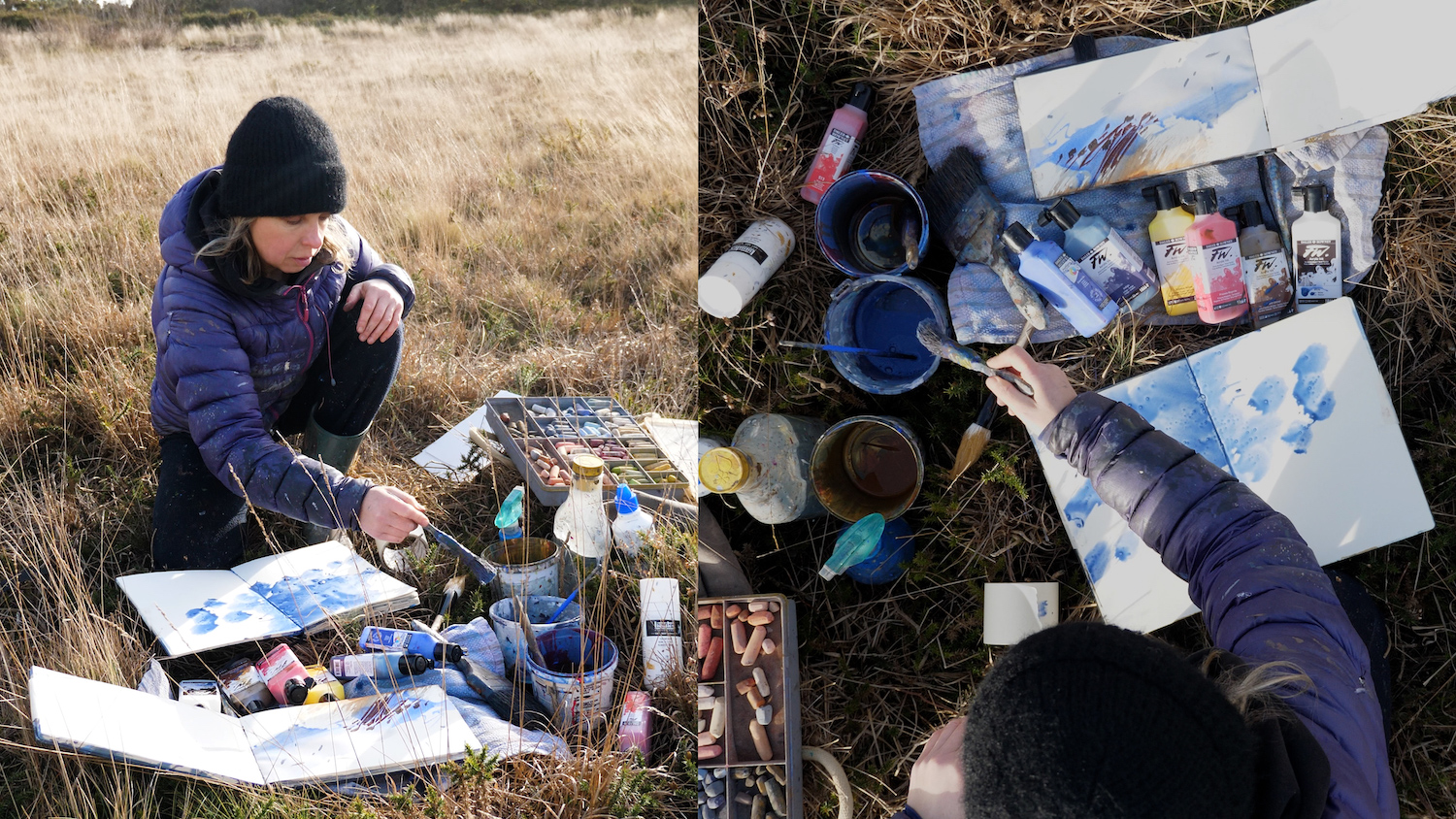
Sam Boughton painting on Dartmoor.
“When I select landscapes to visit I look for places that are layered. Locations with foregrounds that have movement in them such as grasslands, and interesting features in the distance such as trees and cloudy skies.
When I first arrive, I set my materials out directly on the ground and then take time to feel what is happening around me. Is it warm, cool, or windy? Is there any movement, such as birds? I try to absorb the landscape, and that will give me an idea of how I will begin to paint."
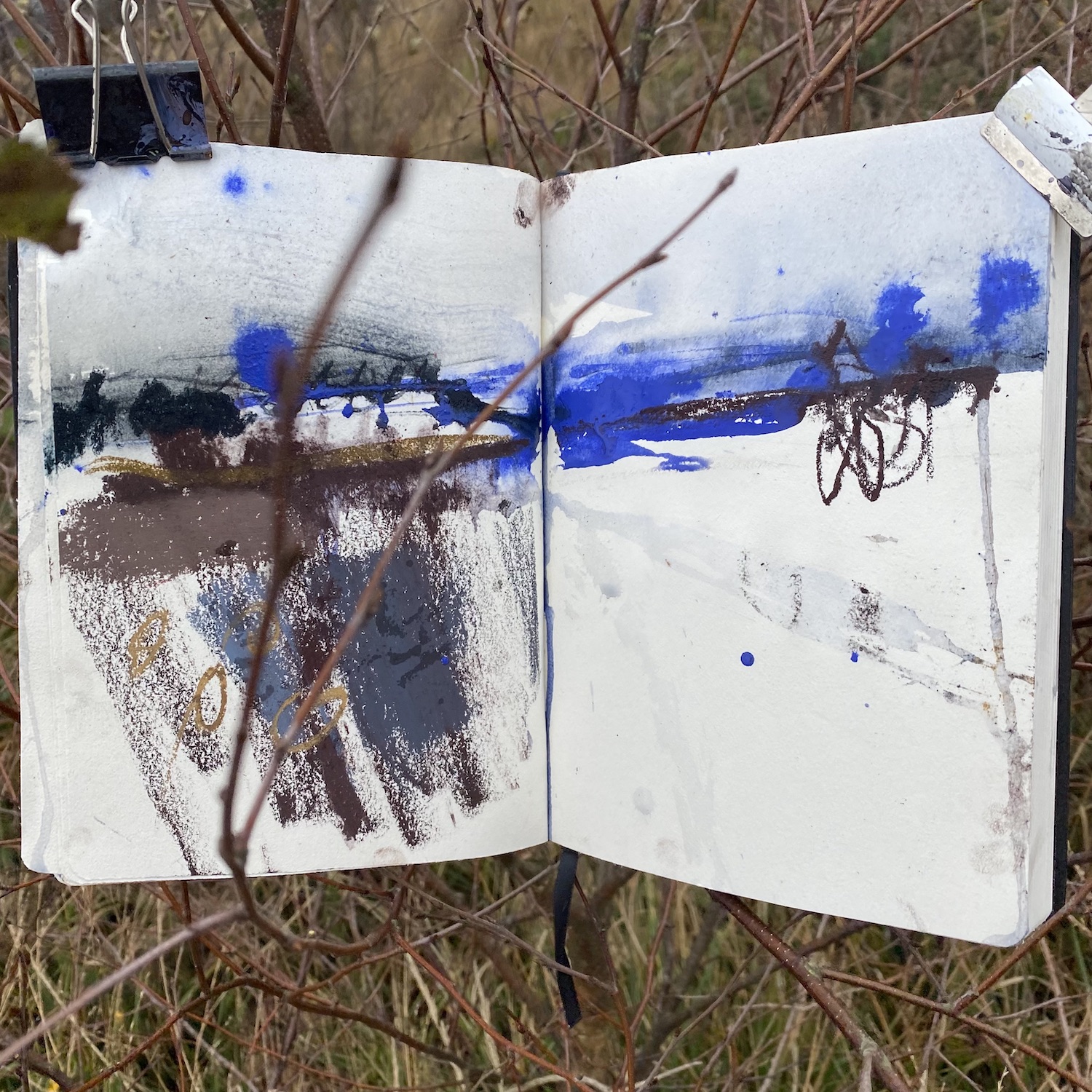
Sketchbook from Dartmoor by Sam Boughton.
"I take a variety of different sized sketchbooks to provide a range of compositional choices. I also carry loose sheets of paper in a variety of formats, Daler FW acrylic inks, and a box of Unison Colour chalk pastels and brushes. The inks are delicate and fluid and I love the way they move across the paper and how I can use them to build up layers of colour and tone. The pastels sit on the dried inks beautifully and give a dynamic contrast to the softer ink layers.”
Sam's Tips
- Leave a page gap between studies in your sketchbook, this helps to keep the paintings clean and it also means you can remove the sketches from the book to work from, and put up, back in the studio.
- Try using different coloured papers such as cream, grey or white, this creates another dynamic to the paintings.
- Work on several sketches simultaneously, you can then use the ink mixes on each piece.
- Try using the inks in a diluted form as well as straight from the bottle.
- Experiment with combining colours, select colours that evoke the seasons and weather conditions.
- Select the right tools for the marks you want to make. A large dry stiff brush will make scratchy marks that would be ideal for grasses whereas a soft wide wetter brush would be ideal for the sky.
- Look for contrasts in marks, for example, large solid marks against small delicate ones.
Year-Long Online Landscape Course
The year-long online course has contributions from 16 respected landscape painters, each sharing filmed demonstrations. The artists have devised over 80 exercises for participants to complete alongside studio visits, professional development, and interviews. The pre-recorded course is delivered online over six sessions, directed and hosted by Anita Reynolds. The course is designed to be experienced from the comfort of your own studio/home, and with 18 months of access, you can really make the most of the wealth of information, exercises and tips from all of these respected landscape artists
Uniquely, the course also includes over 40 looped films of the locations these artists often visit for participants to paint from; of the coastline and moorland around Cornwall and Devon. There’s amazing drone footage, guidance, and countless tips on how to energise and improve your landscape painting practice.
View the Year-Long Online Landscape Course here.